
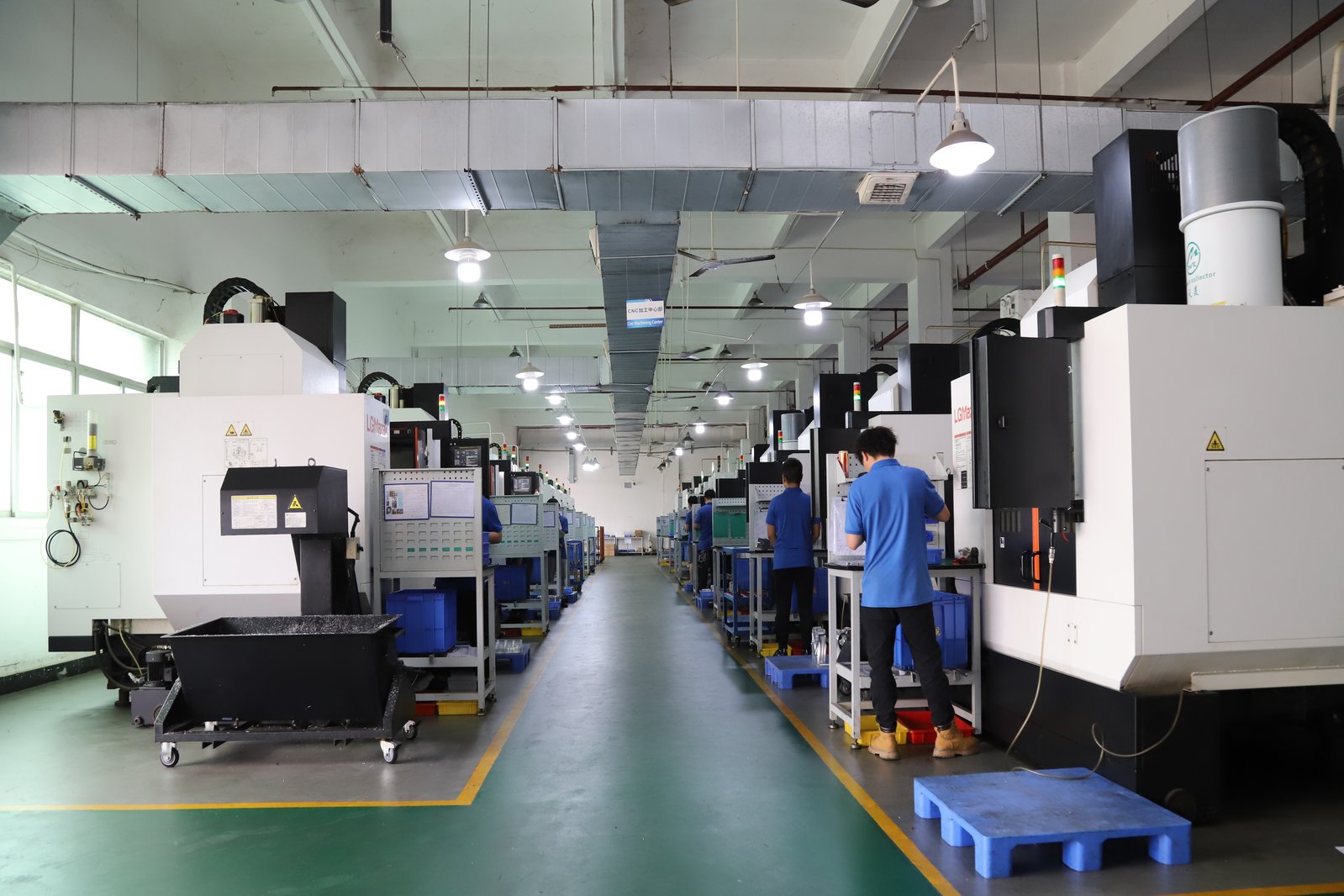
Some parts are pure turning and some are pure milling, but many of the parts a machine shop quotes are neither — they carry turned diameters and shoulders that define an axis, and milled flats, slots and holes that hang off that axis. For those parts the schedule is decided less by the cutting than by a single fork in the route: does the geometry stay on one machine that can both turn and mill, or does it transfer between a lathe and a machining center? Every transfer adds a queue, a re-fixture and a datum risk; every avoided transfer removes all three. This guide follows that fork through quoting, validation and production, and shows how the turning-milling decision shapes the lead time from the first article to the crate.
Why is a transfer between lathe and mill such a big schedule event?
A transfer between machine types is rarely a single event; it is three events stacked. The part leaves the first machine and enters the queue of the second, where it waits for however long that queue is. It is re-fixtured, and the fixture has to locate it accurately enough that the milled features sit in the right relationship to the turned axis. And the two halves of the geometry are then linked only by the quality of that second setup, so the inspection has to prove a position or concentricity story that was reconstructed rather than produced in one clamping. Each of those three events costs real time, and together they often exceed the cutting time of the part.
Buyers see the effect of transfers most clearly in the difference between quoted tiers. A part that stays on one machine can be a short-tier order; the same part forced to travel between a lathe and a mill inherits a second setup, a second program and a second queue, and it moves to a longer tier for reasons that have nothing to do with its material or its tolerances. The question to ask at quoting is therefore not only how the part will be cut but whether it will be cut on one machine or two, because the answer predicts the tier better than any other single fact about the geometry.
When does a turning-milling part genuinely need two machines?
Combined turning-milling machines have limits, and a part that exceeds them legitimately needs two machines. The envelope is the first limit: a part longer or larger than the mill-turn machine can swing and travel cannot ride that route. The second limit is the feature set: a part with deep milling on faces far from the axis, or geometry that needs the full reach and rigidity of a dedicated machining center, may be better served by a transfer even when the envelope would fit. The third limit is volume: at very high quantities a dedicated process on separate machines may out-run a combined machine, and the schedule trade shifts.
For the large middle ground — parts inside the combined envelope whose milled features are within the machine's capability — one machine can hold the whole route, and the question becomes availability rather than possibility. A shop with a free mill-turn center can start the part the day the material arrives and finish it in one setup; a shop without one must quote the transfer route even though the part could be done in one. Asking which machine group the part is planned for, and whether a combined route exists on the floor, tells you whether the part will be quoted as a one-machine job or a two-machine job before a single date is mentioned.
What does a single-setup route do to the inspection story?
The most valuable effect of a single setup is not the time it saves but the geometry it protects. When turned and milled features are cut in one clamping, their relationship is fixed by the machine's own accuracy and repeatability; the axis that was turned is the axis the milled features are measured against, and no re-fixture can drift between them. The CMM then confirms a position and concentricity story that was produced in one coordinate frame, and the report is clean because the geometry is clean. On a transferred part the same features carry the accumulated error of two setups, and the inspection has to prove that the second setup found the first within tolerance.
The practical consequence shows up in tolerances that are otherwise marginal. A position callout between a milled hole and a turned shoulder that is comfortably held in a single setup can be hard to hold across a transfer, because the second setup adds its own locating error to the machine's. When a drawing carries tight relationships between turned and milled features, the single-setup route is not just a scheduling preference; it is the process that makes the tolerance achievable at all. Ask the shop which features the datum structure ties together and whether they are cut in the same clamping, because that answer decides whether the tolerance story is comfortable or marginal from the start.
How does part programming affect the combined-machine schedule?
A combined route is one program instead of two, but it is a more demanding program to write and to prove. The toolpath has to coordinate the rotating axis with the milling axes, sequence the operations so chips and tool changes do not interfere, and avoid collisions in a machine that moves in more ways at once. Writing that program takes longer than writing either half of a transferred route, and validating it on a first article takes longer still, because the program's correctness shows in the relationship between features that were cut in different modes. The front of the combined schedule therefore carries a longer engineering and validation block.
The trade is that this longer front replaces two validation cycles and one full transfer on the back end. A transferred part needs its lathe first article, its mill first article, and the inspection that ties them together; a combined part needs one first article that proves the whole sequence. For a one-off prototype the balance can go either way, but for a production part with repeats, the single program is validated once and reused, while the two-machine route pays its two setups on every order. The schedule comparison is not the first order's front end but the life of the program, and that is where one-setup machining compounds its advantage.
When is turning first, and when is milling first?
The order of operations on a mixed-feature part follows the datum story, and the datum story is set by which features control the part's function. When the turned diameters define the axis and the milled features hang off it — the usual case for a fitting, a coupling or a housing half — the part turns first, establishing the axis, and the milling follows relative to it, so the flats and holes inherit a clean, machine-held datum. When the critical relationships run the other way, with milled datums that the turned features must respect, the sequence reverses. The decision is made in the design-for-manufacturing review, not improvised on the floor.
The sequence is a schedule input because it decides which machine group owns the part first and how the queue sits. A part that turns first waits on the lathe or the combined machine, then moves through whatever secondary milling remains; a part that mills first needs the machining center at the front of its route. Where the design allows, choosing the sequence that keeps the critical features in the longest single setup shortens the schedule, because it minimizes the features that depend on a re-fixture. The DFM review should state the recommended sequence and the reason, and a buyer who understands the reason can see why the route is shaped the way it is.
What makes a mill-turn program validation take longer?
Validating a combined-machine program is more demanding than validating either half of a transferred route, for two reasons. The first is the coordinate relationship between the rotating and the fixed axes: the program has to prove that a milled feature lands where the turned axis says it should, and an error in that relationship shows up as a position or concentricity failure that can be hard to trace. The second is the machine's complexity: more moving axes mean more ways for a program error to produce a collision, so the dry-run has to be thorough and the first article cautious. Both of these extend the validation block on the front of the schedule.
The honest cost of that validation is paid once per program, and it buys the removal of every transfer from every future order of the part. A part that was validated on a combined machine and then reorders rides a proven program through the same route, and its schedule is material plus a short setup plus cutting. A transferred part pays its two setups and its second first article on every reorder, and the datum risk it carries is not a one-time cost but a standing one. Buyers weighing a slightly longer first validation against permanently shorter repeats are usually better served by the longer first validation, and the shop's DFM notes should say so plainly.
How should I schedule a part that must transfer between machine types?
When the part genuinely needs two machines, the schedule discipline starts at the quoting conversation: book both machines at the same time, so the second queue does not add a hidden wait after the first operation finishes. Ask which machine runs first, when that machine is available, and when the second machine's next slot falls, because the gap between the two slots is a real part of the lead time that a two-machine estimate will hide if it quotes each machine's duration without the queue between them. The transfer itself should be planned as a route event with its own handling: how the part is located in the second setup, how the datum is preserved, and what the measurement will confirm about the relationship between the two halves of the geometry.
The buyer's other lever on a transferred part is the tolerance story between the two setups. A design that relaxes the callouts across the transfer, or moves the critical relationships into a single setup by re-sequencing, shortens the schedule more than any machining speed, because it removes the hardest part of the inspection and the riskiest part of the process. When the transfer cannot be avoided, at least make it deliberate: name it in the route, book both ends of it, and inspect the datum relationship as a key characteristic rather than hoping the second setup found the first. The parts guide on this site explains how turned and milled features interact on a drawing, and the quality page shows how the datum relationships between setups are measured and reported.
One further habit protects the schedule of any mixed-feature part, whether it runs in one setup or two: keep the route decision stable across orders. A part that alternates between a single-setup run one month and a transferred run the next carries two different datum stories and two different validation baselines, and its reorders never converge on a proven process. The route that was validated on the first article should be the route every repeat runs, unless a deliberate change with its own validation is made. A stable route is what lets the second order of a turning-milling part ride the first order's validation, and it is the quietest schedule saver in the whole geometry.
Frequently Asked Questions
Why is a transfer between lathe and mill such a big schedule event?
Because a transfer is three events at once: the part waits in the second machine's queue, it is re-fixtured and its datum story re-established, and the two halves of its geometry are linked only by the quality of the second setup. Together those events often exceed the machining time of the part.
When does a turning-milling part genuinely need two machines?
When the geometry exceeds the combined machine's envelope or capability, or when volume justifies a dedicated process split. For parts inside the combined envelope, one machine can usually hold the route, and the question becomes machine availability rather than possibility.
What does a single-setup route do to the inspection story?
It removes the biggest source of position error. When turned and milled features are cut in one clamping, their relationship is set by the machine's accuracy, and the CMM confirms a story produced in one setup rather than reconstructed across two. Fewer setups means fewer datum risks and a cleaner report.
How does part programming affect the combined-machine schedule?
A combined route is one program instead of two, but a more demanding one, because the toolpath must coordinate rotation and milling and prove the whole sequence on a first article. The schedule pays a longer validation up front to save a full transfer on the back end, which usually pays across repeats.
When is turning first, and when is milling first?
The order follows the datum story. Turn the surfaces that define the axis first, then mill relative to that axis so the milled features inherit a clean datum; reverse it when the critical relationships run the other way. The sequence is a schedule input because it decides which machine group owns the part first.
What makes a mill-turn program validation take longer?
The program must prove the coordinate relationship between the rotating and fixed axes, and a collision or coordinate error is more expensive on a more complex machine. A thorough dry-run and cautious first article are the honest cost of one-setup confidence, replacing the two first-article passes a transferred part needs.
How should I schedule a part that must transfer between machine types?
Book both machines when the first is booked, plan the datum transfer explicitly — how the part is located, how concentricity is preserved, how the measurement confirms it — and name the transfer as a route event. A transfer that is planned costs one queue; one that is discovered costs the schedule twice.
Want a mixed-feature part quoted on the route that actually suits it?
Email the STEP or IGES model with your toleranced drawing to [email protected] or call +86 13126536955, and receive the sequence recommendation, the single-setup option if it fits, and the transfer plan if it does not.