
- MOQ 1 piece — low and high volume on the same machines and quality system.
- 100+ production machines — flexible capacity across any batch size. ±0.003 mm CNC milling, ±0.002 mm CNC turning; ±0.002 mm grinding.
- Setup quoted separately — see how it amortizes across your run.

Can this manufacturer scale from one part to production?
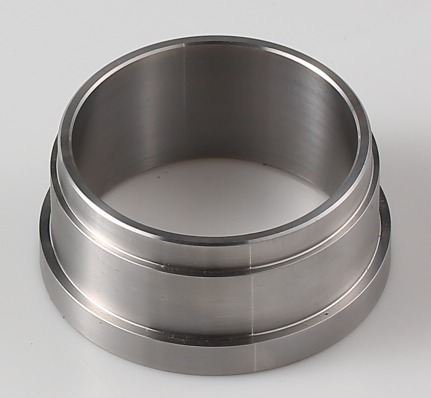
Yes, and that continuity is the economic advantage. The MOQ is 1 piece, and low-volume and high-volume work run on the same over a hundred machines and the same quality system — there is no separate prototype line with looser discipline. That means the single part you validate is produced under the same control as the thousand parts you later order, so the economics scale cleanly without a re-qualification step in the middle.
Why continuity matters: a prototype is only worth what it predicts. If the validation part runs on a different line, under a different operator, with different inspection than the production parts, then what you validated is not what you will receive. The economic cost of that gap is a re-qualification — extra first articles, extra inspection, extra lead time — paid for after you thought the part was already proven.
How to judge it: ask whether the same work instruction and the same CMM program cover both your prototype and your production run. If the answer is yes, the pilot actually de-risks the scale-up. If the answer is no, your pilot was a sample, not a validation, and the scale-up is where the real risk begins.
How does the machine count affect batch economics?
Machine count is what gives one factory the flexibility to serve both a prototype and a production run. With 100+ production machines, a job slots in at any batch size without displacing others, and a machine failure does not idle your part. A shop with thin capacity can only serve one batch profile economically; a shop with deep capacity serves the whole curve.
| Process | Capacity | Batch flexibility |
|---|---|---|
| 3-axis milling | 50+ centers | Single parts and long runs |
| 4-axis milling | 20+ centers | Mid-batch work |
| 5-axis milling | 20+ centers | Complex parts at any volume |
| CNC turning | 25+ lathes | Round parts from one to many |
| Precision grinding | 7+ grinders | Finish operations at scale |
Machine count matters for economics in two ways the quote never shows. First, redundancy: when a machine goes down, the job moves to a sister machine instead of stalling your delivery, and a stalled delivery is a cost that lands on your program, not the shop's. Second, scheduling slack: with deep capacity, a pilot batch can slot in without displacing a production run, so your prototype does not wait in line behind someone's steady order.
How does setup amortize on this manufacturer's machines?
Setup is quoted as a fixed cost, separate from the unit price, so you can see exactly how it divides across your run. At a pilot quantity, the setup is a large fraction of each part's cost; at production volume, it rounds to near nothing per part. That transparency is what lets a buyer see the cost curve, and the curve is what tells you whether to buy 100 now or 5,000 over the year.
The reason to demand the setup as its own line is that it is the only number that is truly fixed. Material scales with quantity; run time scales with quantity; inspection scales with quantity. Setup does not. When it is buried inside a single unit price, you cannot tell how much of what you are paying is a one-time cost you will never pay again on the reorder.
The practical check is to ask for the same part quoted at two quantities with setup shown. The unit-price gap between them is the amortization at work, and the reorder price — setup already paid — is the number you will actually live with for the life of the part.
What tolerances does this manufacturer hold, and do they hold at volume?
±0.003 mm on CNC milling, ±0.002 mm on CNC turning, and ±0.002 mm for precision grinding, verified on Hexagon CMMs with process capability Ppk ≥ 1.67 at the initial study on key characteristics and Cpk ≥ 1.33 on general characteristics. Capability is reported per characteristic: every report names the feature, its tolerance band, the sample size, the sigma method, and the study window. Tolerance does not degrade at high volume, because it is held by a controlled process, not by luck on a first article. A manufacturer whose tolerance survives a production run is one whose unit economics are real — rework would quietly eat the volume discount.
Why tolerance and price move together: a tighter tolerance means a slower process, more inspection, and a higher reject rate if the process is not capable. A shop that holds ±0.002 mm (turning) / ±0.003 mm (milling) by machining to the middle of the band and verifying on a CMM pays for that control in cycle time, and a shop that does not will pay for it in rejects. Either way, the tolerance on the drawing is a cost line, and it should be quoted as one.
your question on every tolerance callout is whether the function actually needs it. A feature that works at a looser tolerance but is drawn at ±0.002 mm (turning) / ±0.003 mm (milling) has bought a grind it does not need, and on a production run, that single callout is a permanent tax on every part.
Which materials does this manufacturer run, and how do they price?
The material grade sets both the raw bar cost and the cycle time, so it is the economic lever you hold before the supplier sees the part. The manufacturer runs aluminum, stainless steel, carbon and alloy steel, brass, copper, titanium, magnesium, and engineering plastics, and verifies every incoming lot by XRF against the mill certificate, so the grade you specify is the grade that runs and the cost is known before the first chip.
Why the grade is a two-sided lever: the bar price is a line item that divides across the run, but the cycle time is a cost that repeats on every piece. A material that saves on raw bar but slows the spindle can cost more by the time the last part leaves the machine. On a single part the difference is small; on a production run it compounds into real money.
your move is to ask, for each grade, what the cycle-time difference actually is and whether a free-machining alternative would hold the same function. A substituted grade that runs faster is a cost cut that requires no negotiation and no change to the design.
| Material family | What it costs you | Where it shows up on the curve |
|---|---|---|
| Aluminum | Low bar cost, fast cycle | Low unit cost at every volume |
| Stainless steel | Higher bar cost, slower cycle | Unit cost stays elevated at volume |
| Brass | Low bar cost, very fast cycle | Cheap on free-machining parts |
| Titanium | High bar cost, slow cycle | Unit cost climbs fast with quantity |
How do process steps drive the batch cost?
Process steps compound cost at any volume. A part with 10–20 steps costs more than a three-step part, and the gap widens with quantity because every step repeats on every piece. Simplifying the routing — reducing setups, eliminating an unnecessary operation — is the cheapest way to lower unit cost without touching material or supplier. A manufacturer that reads the drawing and flags unnecessary steps is one that is optimizing your economics, not just quoting them.
What to watch for in a routing: a second pass that could be combined into one setup, a heat treatment that could be reordered, a plating that could be sourced closer. Each of these is a chance to remove a setup and a queue. The buyer who reviews the routing with the shop is buying cost out of the process before the first part is cut, which is cheaper than negotiating it out of the price afterward.
- Ask for the step list on the quote, not just the total.
- Question any step that does not map to a feature on the drawing.
- Compare the step count across two quotes — a lower price with more steps is often the worse deal.
What certifications back this manufacturer?
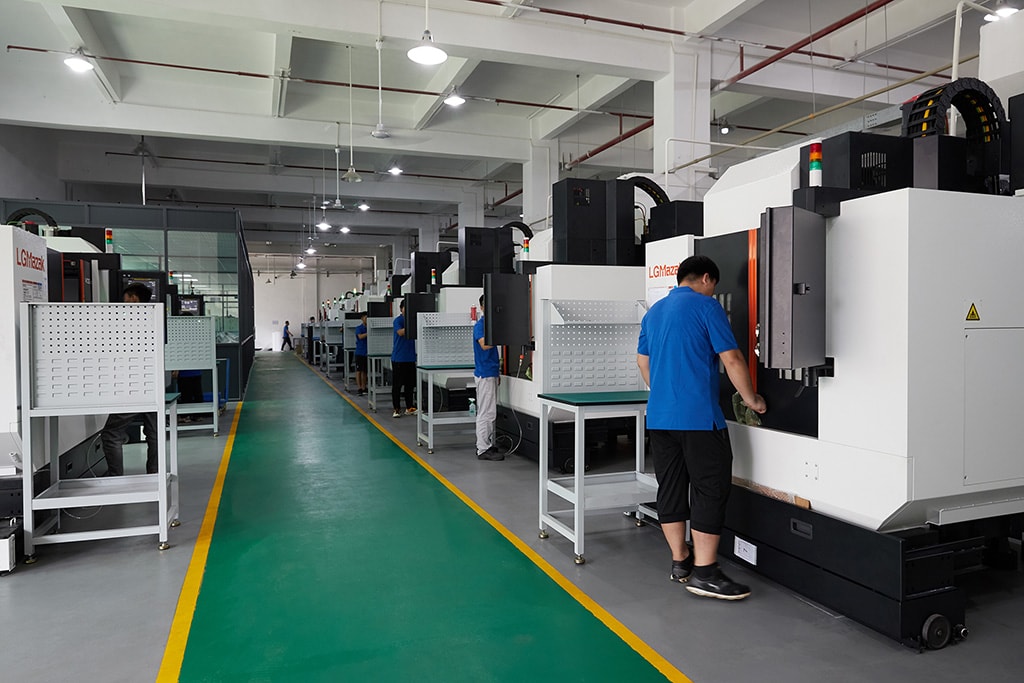
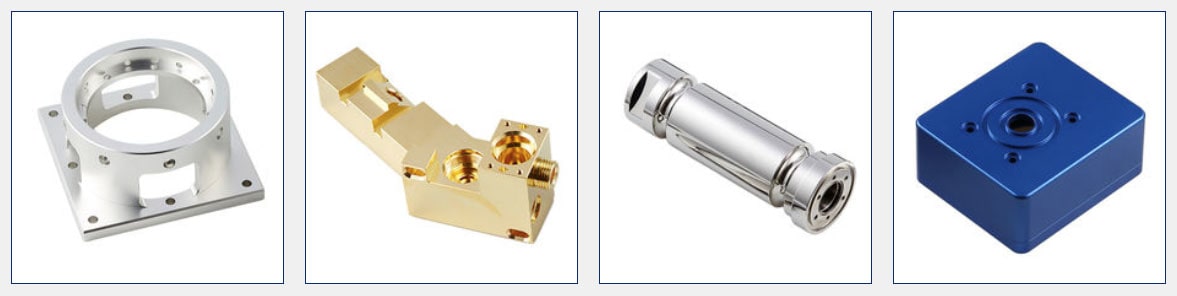
ISO 9001:2015 (116024/A/0001/UK/En), IATF 16949:2016 (131941/A/0001/SM/En), and ISO 14001:2015 (116024/B/0001/UK/En). Certification matters for economics because a controlled process produces fewer rejects, and rejects are the hidden cost that erodes a volume discount. A certified system is the guarantee that the unit price you negotiate is the unit price you actually pay.
Honest scope note: IATF 16949 excludes product design under Clause 8.3 — this is a build-to-print manufacturer, which keeps the economics unambiguous about who owns design responsibility.
Why the certification matters to the cost curve: a controlled process produces predictable output at predictable cost. An uncontrolled process produces the same average price on paper and a very different one in practice, once rejects and rework land on your dock. The certificate is the evidence that the unit price you negotiated is the unit price you will actually pay, at every batch size.
How do you quote a part to see the real economics?

Quote at two quantities — your pilot batch and your projected annual volume — and ask for setup separated from unit price. The gap between the two unit prices is the amortization curve, and it tells you how fast scale pays for itself. Then confirm the assumptions: material grade, process steps, tolerance, secondary operations. Two quotes that differ by 30% are often quoting two different parts, not two different prices for the same one.
Before you accept a quote, run it through these questions from your side of the table:
- Is setup its own line, and is it shown once or on every line? It should be once.
- Which machines are named for the work? A shop that cannot name the process cannot own the process.
- Does the tolerance hold on the production run, or only on the first article? Ask for the SPC chart, not the promise.
- What is the reorder price once setup is paid? That is the number you live with.
- Can the same line serve my prototype and my production run? If not, your pilot proves nothing.
Why does a manufacturer's flexibility set your unit price?
Flexibility is a cost input most buyers never see on a quote, but it decides how cheaply a shop can serve you at each point on the curve. A shop with deep, varied capacity can run your prototype, your pilot, and your production run on the same floor without re-tooling or re-qualifying, so the fixed cost you paid once is never paid twice.
How do you read a manufacturer's capacity before you commit?
Capacity is best read on the floor, not in a brochure. A visit — or a live video walk when travel is not possible — shows you whether the machines claimed on the quote are actually there, and whether they are running your kind of work. The goal is not to count machines for its own sake; it is to confirm that the capacity behind your unit price is real and ready at the batch size you need.
What does a build-to-print manufacturer owe you on the economics?
A build-to-print shop machines exactly what your drawing specifies — no more, no less — and that boundary is an economic one. Design risk stays with you, where it belongs, and the shop's cost is limited to what the drawing demands. There is no hidden re-engineering, no silent grade substitution, and no surprise design charge folded into the unit price.
How does a manufacturer earn the volume you eventually release?
The volume is the reward for a clean pilot. A manufacturer earns it by delivering the prototype on tolerance, on time, and with the process evidence that says the production run will repeat. Your job is to look for that evidence before releasing volume — the SPC chart, the CMM report, the material certificate — because once the volume is committed, the cost of discovering the process was not actually proven lands entirely on you.
The disciplined sequence is: prototype to prove the design, pilot to prove the process, production to pay it down. A manufacturer that rushes you past the pilot is not saving you time; it is shifting the proof burden onto the most expensive part of your program.
Why is the reorder the real test of a manufacturer?
Anyone can quote a cheap first article. The reorder is where the economics get proven: setup already paid, program already written, the only question is whether the process holds. If the reorder price does not fall — or worse, if the reorder comes back off-tolerance — the cheap pilot was a loss leader, not an economy.
The buyer who judges a manufacturer on the reorder, not the quote, is judging the thing that matters. The reorder price is the number you will pay for the life of the part, and the reorder consistency is the quality you will actually receive at volume.
How do you read the gap between your pilot and production prices?
That gap is the amortization curve made visible, and it is the single most useful number on a multi-quantity quote. A wide gap means the part is fixed-cost heavy — it rewards volume and punishes small batches. A narrow gap means the part is mostly material and run time — volume will not buy you much, so there is little reason to over-order.
Read the gap against your own demand, not against an abstract ideal. If your annual volume is modest, a wide gap tells you to buy as little as possible per order. If your volume is large, the same gap tells you the scale-up is where your money is made. The gap is the tool that turns a supplier's numbers into your batch decision.
Why do you pay for the quote's assumptions, not just its price?
A price without assumptions is a number floating in the air. The assumptions — grade, steps, tolerance, secondary operations, delivery window — are what give the number its meaning, and they are where two quotes for the "same" part silently diverge. One shop quotes 303, the other 304; one includes plating, the other leaves it out; one assumes a pilot, the other a production run.
What this shop actually runs
Capability evidence should come as specifics, not slogans. Behind this guide is a 6,800 m2 plant in Dongguan, China running 100+ CNC machines with 100+ staff. The machine list by category:
- 5-axis machining centres (10+) - Mazak VARIAXIS I-600 (510/910/510 mm travel, 12,000 rpm, 22 kW, 71.6 N·m, 30-tool BT40) and Mazak INTEGREX I-250H S (B-axis 0.0001°, 24 kW, 124 N·m, 38-tool HSK-A63). Built for compound-angle parts, single-setup multi-face prismatic work, and aerospace fittings where datum transfer loss is unacceptable.
- 3-axis / 4-axis machining centres (50+) - Brother SPEEDIO S500Z2N / S700Z2N (10,000 rpm, 14/21-tool ATC, 0.7 s tool-to-tool, Z-axis 2.2 G) and Mazak VCE-430A L / VCE-570C L (10,000 rpm, 118 N·m, 24-tool ATC). Built for prismatic parts, plates, brackets, housings.
- Swiss-type turning centres (10+) - Citizen Cincom A20-3F7 (Φ20 mm, 10,000 rpm), TSUGAMI B0206-III / B0205-III (Φ20 mm, 0.1 µm), STAR SR-32JII / SR-32J Type N (Φ32 mm, 8,000 rpm). Built for long, slender rotational parts at ±0.002 mm.
- CNC turning centres (20+) - HEADMAN T70M/1250 (720 mm swing, 117 mm bore, 3,000 rpm, BMT75 12-station turret). Built for shafts, bushings, flanges up to ±0.002 mm.
- Wire EDM (5+) - Sodick AQ535L (550/350/300 mm travel, ±20° taper, 800 kg workpiece). Built for hardened tool steel, internal splines, sharp internal corners that milling cannot reach.
- Inspection: Hexagon CMM + 20+ gauges - Hexagon CMM for coordinate measurement, plus vision system, profilometer, hardness tester, coating thickness gauge, XRF for material verification. The 10:1 rule (gauge 10x more accurate than the band) is applied to every feature.
- Machine highlights - VARIAXIS I-600: one-setup multi-face 5-axis + MAZA-CHECK auto-calibration; INTEGREX I-250H S: DONE-IN-ONE mill-turn, B-axis 0.0001° + Ai thermal shield; SPEEDIO S500Z2N / S700Z2N: Z-axis 2.2 G + 0.7 s ATC; Swiss-type: guide-bush switchable + 0.1 µm resolution.
Tolerance: ±0.003 mm CNC milling / ±0.002 mm CNC turning / ±0.002 mm grinding and wire EDM. Capability: Ppk >= 1.67 initial on key characteristics, Cpk >= 1.33 ongoing.
Certificates: ISO 9001:2015 (116024/A/0001/UK/En), IATF 16949:2016 (131941/A/0001/SM/En, with design clause 8.3 excluded, stated openly) and ISO 14001:2015 (116024/B/0001/UK/En), issued to Dongguan Zhuohang Ltd, registration 91441900MA4UWT6X39, founded 2005.
Where we ship: Austria, Belgium, the Czech Republic, Denmark, France, Germany, Greece, Hungary, Ireland, Italy, the Netherlands, Spain, Sweden and the United Kingdom in Europe; Brazil, Canada, Mexico and the United States in the Americas; China, Israel, Japan, Singapore and Sri Lanka in Asia; Australia and New Zealand in Oceania; and South Africa in Africa — plus other countries and regions worldwide, shipped from our base in Dongguan, China.
Contact: Felipe Iglesias, [email protected], +86 13126536955.
See this manufacturer's cost curve on your part.
Send your drawing to [email protected] or call +86 13126536955 for unit prices at your pilot and production quantities.
Frequently Asked Questions
Can this manufacturer scale from one part to production?
In short, Yes. The MOQ is 1 piece, and low-volume and high-volume work run on the same a floor of 100-plus machines and the same quality system.
How does the machine count affect batch economics?
100+ production machines mean a job can slot in at any batch size without displacing others, and a machine failure does not idle your part. That flexibility is what lets one factory serve both a single prototype and a full production run.
What tolerances does this manufacturer hold?
In short, ±0.003 mm on CNC milling, ±0.002 mm on CNC turning, and ±0.002 mm for precision grinding, verified on Hexagon CMMs with process capability Ppk ≥ 1.67 at the initial study on key characteristics and Cpk ≥ 1.33 on general characteristics. Capability is reported per characteristic: every report names the feature, its tolerance band, the sample size, the sigma method, and the study window.
Which materials does this manufacturer run?
Aluminum, stainless steel, carbon and alloy steel, brass, copper, titanium, and magnesium, plus engineering plastics. Incoming lots are XRF-checked against the mill certificate, so material cost and cycle time are known before the first chip.
How does setup amortize on this manufacturer's machines?
Setup is quoted as a fixed cost, separate from unit price, so you can see how it divides across your run. At low volume it dominates the unit cost; at high volume it rounds to near nothing per part.
What certifications back this manufacturer?
ISO 9001:2015 (116024/A/0001/UK/En), IATF 16949:2016 (131941/A/0001/SM/En), and ISO 14001:2015 (116024/B/0001/UK/En). IATF 16949 excludes product design under Clause 8.3 — a build-to-print operation.
Continue reading: CNC Turning Milling Factory · CNC Turning Milling Services · CNC Turning Milling Quality Control
Standards referenced on this page
- ASTM A582/A582M-12 — Standard Specification for Free-Machining Stainless Steel Bars
- ASTM A276/A276M-17 — Standard Specification for Stainless Steel Bars and Shapes
- ISO 9001 — Quality management systems — Requirements