
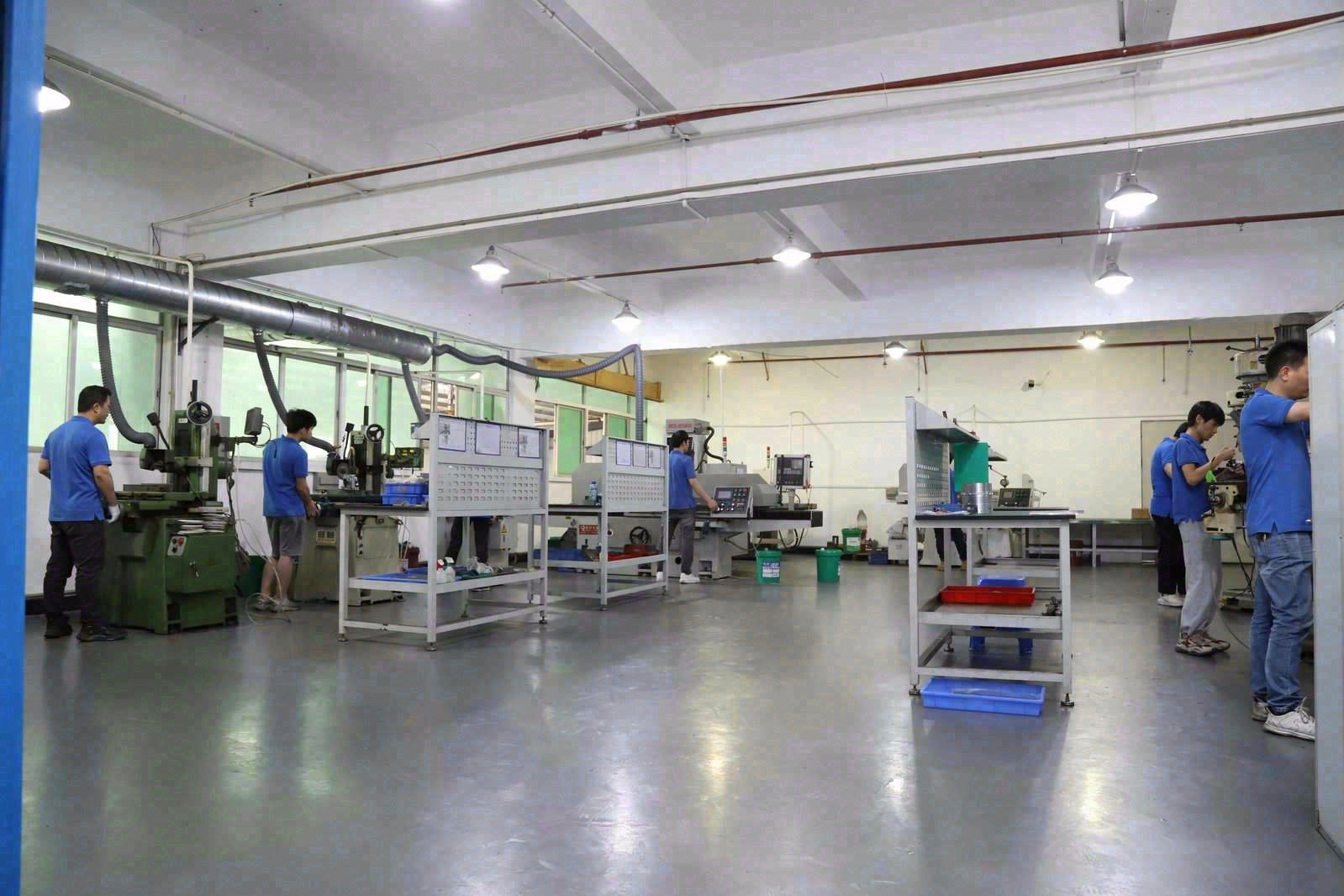
The question "how much does CNC turning and milling cost?" has no honest flat answer, because the price is a stack of decisions: the material grade and bar form, the spindle minutes the features require on the right machine — lathe, mill, or mill-turn — the tolerance each feature must hold, the inspection that proves it, the quantity tier that spreads the setup, and the freight that lands the part on your dock. This guide is the buyer's model for that stack: what each line pays for, which levers move it, why the turning-versus-milling process decision changes the number, and how to build a budget whose delivered total is the number you plan around.
What does a turning and milling quote actually contain?
Strip any serious quote back to its bones and the same lines appear underneath the formatting:
| Line item | What it pays for | What moves it |
|---|---|---|
| Material stock | The bar, plate, or billet at the grade and condition on the drawing | Grade, bar form and diameter, and whether the lot is verified against a mill certificate |
| Machining time | Spindle minutes on the lathe, the mill, or the mill-turn center | Feature count, material toughness, and which process the geometry needs |
| Setup and programming | Fixturing, toolpath work, and first-piece prove-out | A one-time cost per order that dominates small quantities |
| Tolerance and inspection | Finishing passes, CMM and runout checks, dimensional reporting | Every tight feature and GD&T category adds measurement and proof |
| Finishing and special processes | Anodizing, passivation, plating, heat treatment | Each step routes to its own vendor and carries its own record |
No honest shop quotes a price before the drawing and the scope are fixed, and no careful buyer compares one before the lines are visible. The structure is the same at every shop; the differences show up in which lines are itemized and which are absorbed into the margin.
Why does the process decision — turn, mill, or mill-turn — change the price?
The geometry decides the process, and the process decides the machine-hour cost. A round part — shafts, fittings, bushings, rollers — belongs on the lathe, where the work spins against a stationary tool and cylindrical features are cut efficiently. A prismatic part — brackets, housings, plates — belongs on the mill, where the tool rotates against a fixed work-piece. A part with both round and prismatic features belongs on a mill-turn center, which cuts diameters, faces, grooves, threads, and off-axis features with the part held once. Choosing the wrong process for the geometry prices the part at the wrong machine rate and the wrong number of setups.
The mill-turn machine is where the economics get interesting. It costs more per hour than a plain lathe, but it finishes a turned-and-milled part in one chucking, removing the second operation, the re-clamping, and the datum error between them. For a part that genuinely needs both process families — a fitting with a turned body and a milled hex, a shaft with cross holes — the single-setup mill-turn route is often cheaper than a lathe job followed by a milling operation, because the hand-off between two machines carries its own cost and risk. When the quote prices one route and the drawing needs the other, the number is wrong; the DFM review should name the process the geometry actually requires.
Why does material move the price more than the drawing does?
A machining shop does not price metal by the kilogram; it prices spindle minutes. Every pass of the tool is time on the machine, and the material decides how many minutes a given feature needs. A free-cutting grade removes metal fast, wears tools slowly, and holds tolerance without special attention. A grade that work-hardens or traps heat takes more minutes per feature, more tool changes, and more careful passes. On a turning lot, the bar form matters too: the stock diameter sets how much material the roughing passes remove, and a part specified against a larger-than-needed bar diameter pays for minutes of air cutting.
The material families stack into a predictable order. Aluminum and the free-cutting grades sit at the low end. Brass and copper follow, with good machinability offset by metal price. Stainless moves up — slower cutting, work-hardening under the tool, often a passivation or finer finish step. Titanium sits near the top: slow cutting, demanding tooling, and treatment steps that route to qualified partners. Each step up the ladder is a double cost — the stock is more expensive and the machining of it is slower. Name the grade, the condition, and the bar size on the drawing so the quote prices the real material, and verify the shop checks incoming bar against its certificate, because a substituted alloy passes every dimension and fails in service.
How do tolerance and inspection scale the price?
Machining cost is nonlinear in tolerance, and on turned parts the roundness and runout callouts carry their own weight. Moving a feature from a general band to ±0.003 mm changes the feeds, the finishing passes, the tooling, and the inspection method at once; dropping a journal or sealing surface to ±0.002 mm moves it to grinding, a separate process family. Production capability on milled and turned features is ±0.003 mm, with ±0.002 mm by grinding where the print needs a sealing or seating surface, and process capability on key characteristics is tracked at Cpk 1.67 or higher. A turned part whose bores, journals, and threads run in one chucking holds its concentricity in that setup, and the inspection report should carry the runout values to prove it.
Inspection is the line buyers most often ignore until it bites. CMM time on critical features, runout and roundness checks, material verification, and the dimensional report cost real instrument and labor time, and a quote that absorbs them into the margin has hidden the proof the part needs. Ask which inspection is included in the price and what ships with the parts — the dimensional report with measured values, the material certificate, the capability data. A machined order is priced together with its evidence, and a shop that itemizes the inspection line is showing you the real cost of holding tolerance across the run rather than the cost of a lucky first article.
Which features and finishes quietly add cost?
The cost that hides in a drawing is the cost of operations and slow cutting. Deep pockets and thin walls force conservative cuts. Small internal radii force small tools and slow feeds. Internal threads and long bores add cycle time on both lathe and mill. Many setups across features add fixture and alignment time. Fine surface finishes add finishing passes, and finishes below what machining holds move to grinding. Each is a legitimate cost, and each is a negotiation point in the DFM review — a good shop will flag the features that are tighter than the function needs before quoting, and the redesign conversation is where a machined part gets cheaper without losing function.
Finishing adds its own line and its own economics. Anodizing grows the dimension, so the allowance must be machined in; heat treatment changes the material and routes to a qualified partner; passivation and plating each carry their own records. Ask which steps run in-house and which route out, because the answer defines where the quote can stretch and where the schedule can slip. A shop that owns its finishing can name the coating, the allowance, and the partner; one that folds the step into a vague "included" has handed you a handoff you cannot price.
How do quantity and order structure bend the unit price?
The one-time lines — setup, programming, fixturing, first-article inspection — are fixed whether you order one part or a thousand, so a prototype carries them all on one piece. Minimum order here is one piece, with prototypes on the same machines and tolerances as production, so the prototype price is the honest anchor and the production tier shows the fixed lines spread thin. Between them sits the bridge order — ten to fifty parts that exercise the fixtures, the tooling, and the documentation before volume — and a shop that quotes all three tiers is showing you the whole cost curve instead of its two ends.
The iteration loop is part of the same curve. Every design revision triggers a new first-article check and a new record, and a shop that prices the revision loop as its own line is giving you the real cost of learning rather than hiding it in the margin. Budget the quantity you actually plan to order across the program, ask for the unit price at two very different quantities, and read the spread: a price that collapses with volume is setup-bound, and the lever is fewer setups or more volume; a price that barely moves is time-and-material-bound, and the lever is the design or the material.
What does freight and terms do to the quote?
The price on a machining quote is not the price on your dock. Freight, duty, and the delivery scope sit outside the machine shop, and the incoterm decides where your responsibility begins. An Ex Works price and a delivered price can describe the same part at numbers that differ by more than the freight itself, because the delivered price carries the shipping leg the factory price leaves to you. Name the incoterm when you request the quote so every supplier prices the same scope, and compare the landed, delivered cost rather than the factory price.
Location compounds the arithmetic. A machining shop in the Pearl River Delta near Hong Kong and Shenzhen ports keeps the shipping leg short for overseas buyers, and the machining-cost advantage of China sourcing survives the freight leg for many parts, but the only proof is a landed-cost comparison run on your own part. Add freight, duty, and payment costs to the machining price, price every candidate on the same incoterm, and compare the delivered totals. The machining quote is the largest line, but the delivered total is the decision.
How do you compare quotes and build a budget that holds?
A quote you can compare states its assumptions. Send the identical package to every candidate — the same drawing revision, the material grade and bar form named, the quantity, the incoterm, and the requested document set — and ask each quote to split material, machining, setup, and inspection, and to state the process route it prices, the tolerance it will hold per critical characteristic, and what the report will contain. When a line is missing, assume the cost is hiding rather than absent: a shop that cannot name its inspection, its instruments, or its certificate numbers is not offering a lower price for the same part — it is offering a part without the proof.
Then build the budget in three steps. First, verify the shop before you budget against its price — the entity, the certificate numbers with the registrar, and the floor behind the quote; the factory page shows the evidence a real manufacturer can produce. Second, get the DFM review before you fix the number, and fix the drawing first. Third, quote prototype, bridge, and production on the same page with the terms, so the price that lands is the price on the quote. The services overview shows how machining, inspection, and finishing combine into one order, the parts guide shows how material, tolerance, and finish translate into a quoted part, and the contact page is where a model and an annual volume become an itemized quote. Keep the closing rule in front of you: the cheapest quote on machining work is rarely the cheapest part in service, because the evidence you skip at purchase becomes the cost you carry at inspection.
Frequently Asked Questions
How much does CNC turning and milling cost per part?
There is no honest flat rate — a turned or milled part is priced by the material grade and bar form, the spindle minutes its features require, the tolerance and inspection depth, the quantity tier, and the freight term. The fastest route to a real number is a complete package: the model, the toleranced drawing naming the grade, the finishing requirements, the quantity, and the incoterm.
Why does material move the price more than the drawing does?
Because material sets cutting speed, tool wear, and process care, and all three become spindle minutes and tooling cost. The same geometry can cost a multiple more in a tough or work-hardening alloy than in aluminum or a free-cutting grade. Name the grade and condition on the drawing.
How much does a tight tolerance add to the price?
Machining cost is nonlinear in tolerance. Moving a feature to ±0.003 mm changes feeds, finishing passes, and inspection, and dropping a journal or sealing surface to ±0.002 mm moves it to grinding. Reserve the tight band for features that mate, rotate, or seal, and let the rest ride a general tolerance block.
Why is the inspection line a real part of the price?
Because CMM time, runout and roundness checks, material verification, and the dimensional report cost instruments and labor. A quote that hides the inspection line has hidden the proof the part needs. Ask which inspection is included and what ships with the parts.
How does quantity change the per-piece price?
Programming, tooling, fixturing, and first-article inspection are paid once per order and spread across more parts. A prototype at MOQ 1 carries all of them on one piece; the production tier shows them amortized. Quote prototype, bridge, and production tiers together so the whole curve is visible.
Is machining in China cheaper after freight and duty?
For many parts, yes, but the only proof is a landed-cost comparison run on your own part. Get every supplier to quote the same incoterm, add the freight and duty yourself, and compare delivered totals. A supplier in the Pearl River Delta shortens the shipping leg for overseas buyers.
How do I compare quotes from different turning and milling shops fairly?
Send the identical package to every candidate — same drawing revision, grade, quantity, incoterm, and document set — and ask each quote to split material, machining, setup, and inspection. Compare the structure and the delivered total, not the headline number, and weigh the evidence each quote promises to ship.
Want an itemized turning and milling quote that prices the proof with the part?
Email the STEP or IGES model, the material grade, and the toleranced 2D drawing to [email protected] or call +86 13126536955. You will get a design-for-manufacturing review, an itemized quote with the tiers on the same page, and the certificate numbers you can verify before you decide.