
Choosing a CNC turning and milling supplier from another continent does not require a factory visit — it requires a structured screen, because the evidence that separates a real turning shop from a decorated reseller is available from your desk. The method that follows takes about 30 minutes and is built for round parts: five minutes defining what your part actually demands, ten minutes checking the machines and the measurement equipment behind the website, ten minutes sending one benchmark RFQ, and five minutes scoring the answers. What it produces is a shortlist of two or three suppliers worth deeper verification, and a working list of the signals that should have ended the conversation early.
What should you lock down about the round part before you look at a single supplier?
The first five minutes decide the quality of everything after them. Write down what the drawing actually requires in turning terms: the material grade with its bar condition, the concentricity or runout relationships between the features that share the axis, the thread standards and how they will be verified, the surface finish by feature group, and the quantity with a target date. The tolerance reference points are fixed — turning and milling hold fit and alignment features to ±0.003 mm, precision grinding reaches ±0.002 mm, and capability of Cpk 1.67 or higher is the standard on key characteristics — so your list should name which diameters and bores carry the tight band and which run at the general tolerance.
Then define what "qualified" means for this order. A prototype fitting needs a shop that can quote fast, machine it cleanly, and ship it; a production shaft for an audited program needs material traceability, calibrated thread gages, roundness measurement, and first-article evidence. The same screen cannot serve both requirements sets, and trying to make it do so is how the method becomes an all-day project. Fix the requirement list first, and every later step is a comparison of suppliers against that list rather than against each other's marketing.
Which website signals deserve trust when screening a turning and milling supplier?
Read the site like an auditor reviewing a capability sheet. Trustworthy signals are specific and internally consistent: a machine list that names turning centers, mill-turn machines, and swiss-type machines with their models and work envelopes; a materials list that names the alloys and bar forms the shop actually runs; a quality statement with certificate identifiers you could check; a physical address that matches the entity on the quotation; and engineering content written by someone who has set up a lathe. Consistency between those details is the first test, and it is hard to fake well.
The decoration is equally easy to recognize: machine counts with no models, a gallery of glossy shafts with no drawing or program context, superlatives without numbers, and claims that drift between pages — "aerospace certified" on one, "prototype to production" on the next. Remember what a website cannot prove: that a certificate still stands today, that the CMM is calibrated this quarter, or that the bar stock in the photo is actually segregated by heat. The website's only job is to decide who earns the benchmark RFQ; the proof of capability comes from the video walk-through and the paperwork sample that follow.
How do you verify a shop actually turns and mills the parts it claims to make?
The fastest capability test for a turning shop is a live video walk-through, and the way the request is handled is itself a signal. A real shop shows the turning cells with bar feeders running, the tool presetting station, the inspection room, and a spindle close enough to read the machine model — usually within a day. Ask to see a part being cut that resembles yours, and ask which machine class the shop would choose for your part and why. The answer should reference your diameter, length, and feature mix; a shop that quotes every round part on the same machine has one tool and will make your part fit it.
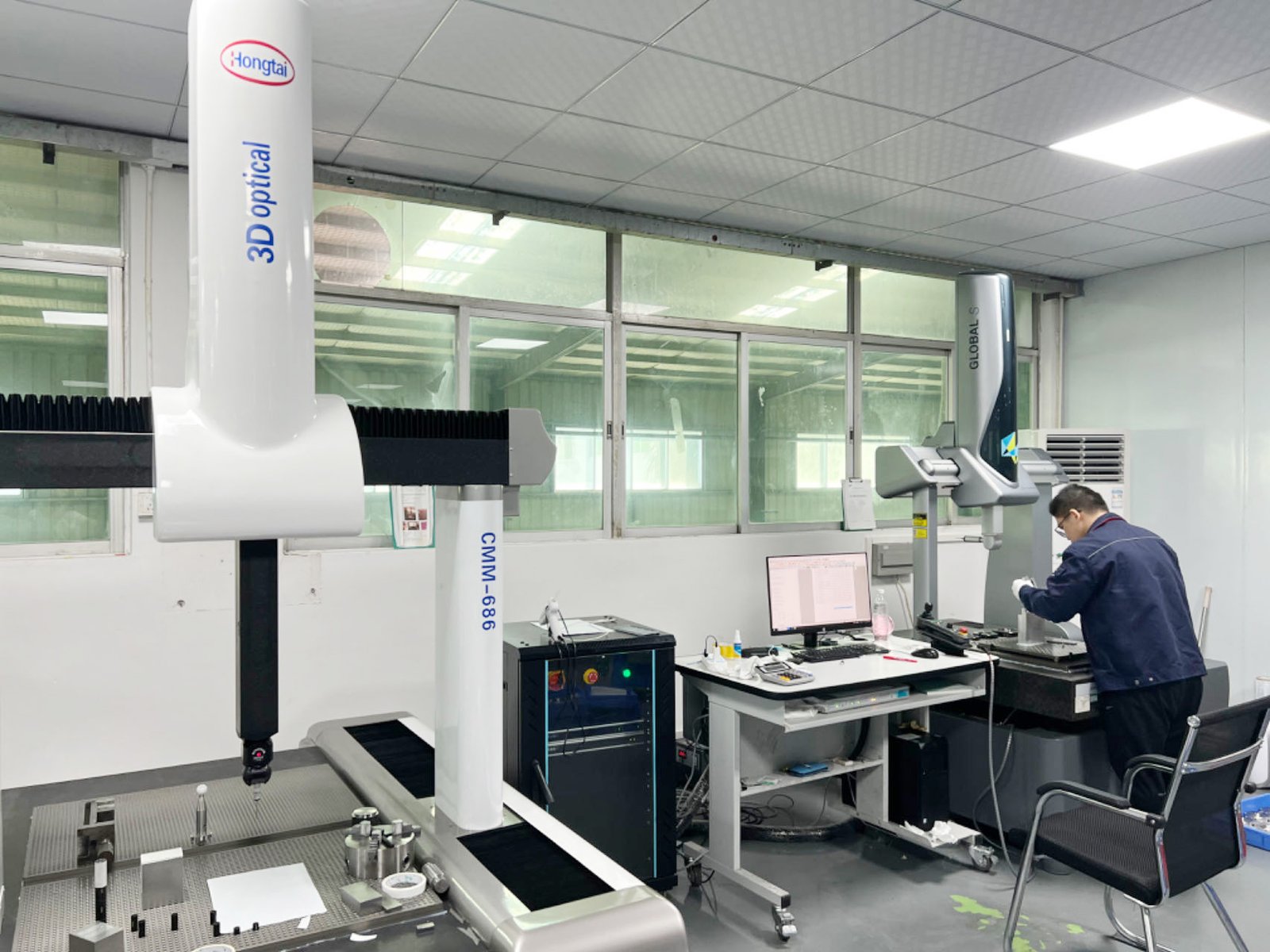
Then verify the measurement side, because turning quality is decided in the inspection room. Ask which instruments measure roundness, surface finish, and the true positions of the milled features — a shop that measures a journal on a V-block and calls it round is not equipped for the part on your drawing. Ask for photographs of work like yours with the drawing or program visible in the frame, and check the entity: the business license name should match the quotation and the factory address, and if the website belongs to a trading company it should say so and name its factory. None of these questions is intrusive; a shop that sells turning for a living can answer every one of them from memory.
Which quality questions separate a genuine turning shop from a reseller?
Start with the quality system and verify it by number with the issuing registrar — a system such as ISO 9001:2015 is the common baseline for component machining, with IATF 16949:2016 (product design excluded) and ISO 14001:2015 for automotive and environmental scope respectively. A certificate number that resolves cleanly is evidence; a scan with a blurred number is decoration. Then move to the floor questions that matter for turned parts: is incoming bar verified against its mill certificate, are thread gages on a calibration schedule, is roundness measured on a real instrument, and does the shop produce dimensional reports that list measured values rather than a single line of conformity?
The decisive follow-up is the paperwork sample. Ask for a redacted copy of a completed lot's package — the bar certificate, the incoming verification record, the dimensional report, and the packing list, with customer names removed. A real shop has this on file from the last shipment; a reseller has a folder of certificates that cannot be connected to specific parts. Read the sample the way your own inspector will: do the documents name the same heat and the same work order, and does the report show measured runout and finish values for the features that would be critical on your drawing? That ten-minute review answers more than an hour of conversation about quality philosophy.
What should your benchmark RFQ contain to make turning quotes comparable?
Send one real part — a fitting, a shaft, or the actual component you intend to buy — with the same information package to every shortlisted supplier. The drawing carries the geometry, but the RFQ text carries the turning requirements: the material grade with bar condition and certificate expectation, the concentricity and runout callouts that matter, the thread standards with their inspection method, the finish by feature group, and the real quantity. Add the same three questions for every candidate: which features would you route to a different process, what documentation ships with the lot, and what lead time can you hold at this quantity. Same package, same questions, same deadline, that is what makes the scoring fair.
Read the replies for what they reveal beyond the price. A serious turning shop replies inside two business days with questions about your part — a corner radius in a groove, a thin wall, a runout callout that needs a grinding pass, a thread class it wants to confirm. Those questions are the strongest signal in the whole process because they mean the shop is planning your setup. A reply with no questions has quoted the drawing without engineering it. And the DFM note that says "we recommend grinding on these two journals" is worth more than a discount, because it is the shop telling you the truth about its own process before it cuts a chip.
How do you score turning quotes when they arrive?
Score against the requirement list you wrote in the first five minutes, with each criterion weighted for this part. For a fitting whose value is concentricity, the written confirmation of the runout band and the inspection plan outweighs a price difference; for a prototype, speed and communication may outweigh everything. A simple table — requirement, weight, supplier A, supplier B — keeps the comparison honest and leaves a record of why you chose what you chose.
Look at structure before price. A turning quote that itemizes bar material, machining, any heat treatment, inspection, and freight, states the Incoterm, and confirms or flags each tolerance in writing is a quote you can compare. A lump sum with no breakdown is not cheaper — it is unknowable, and the uncertainty will surface later as a surprise on the first article. Price the total delivered cost at your quantity, subtract any candidate that was evasive on runout, threads, or lead time, and the two or three that remain are the ones worth the registrar check, the reference call, and the deeper audit.
Which red flags should end the conversation with a turning supplier?
Some signals end the conversation outright. Full prepayment on a first order is one — the defensible structure is a deposit with the balance against shipping documents or a passed inspection, and a supplier demanding everything up front is asking you to carry all the risk. Unverifiable certificates are another: if the quality claim cannot be checked with the registrar, it is not a claim, it is a risk. Add to the list a refusal to show live tooling during the audit, a business license that does not match the quoted entity, and a trading company that will not name its factory.
Then the behavioral red flags: a machine list that never changes between RFQs, a quote that agrees with every tolerance and every finish with no questions, price that moves between email and formal quotation, and urgency pressure that gives you no time to verify. On a turned part, add one turning-specific warning: a shop that claims mill-turn capability but cannot show live tooling cutting a flat or a cross-hole is likely sending the milling out, and the concentricity story your drawing depends on lives in that single setup. Each red flag is a cost you will pay later — in inspection, in scrap, or in a dispute — and the screen is designed to surface it while the only thing at stake is an email.
What should you verify before the first production turning order, even after a clean screen?
The screen qualifies a supplier for a conversation; the first order qualifies it for a relationship. Before committing volume, run the checks that no website can replace. Verify the certificates by number, run the structured video audit with the live-tooling request if you have not already, and ask for a reference from a customer with work similar to yours. Then place a small order of the real production part — enough to produce a first article and a short run, not enough to hurt — and require the full package before you release the balance: the first-article report with measured runout and thread results, the bar certificate with the incoming verification, and the dimensional report against your drawing.
That first order is a paid qualification run. When the parts arrive, verify them as your customer will: re-measure a critical diameter and the runout your drawing calls out, run your own thread gages on a sample, and check the paperwork against the drawing revision. The supplier that survives that test cleanly has earned the volume order; the one that does not has cost you a small lot instead of a large one. The quality page explains how inspection and documentation are handled on this site, the factory page shows what a visit or audit would see, and the FAQs cover quoting and the batch economics that decide your order size.
Frequently Asked Questions
How do I know a supplier can hold the concentricity my drawing demands?
Ask how the critical features are cut and measured, then require the measured runout values on the inspection report for the features your drawing calls out. A shop that measures what you asked for is holding the process; one that reports only sizes is not. The setup logic — which features share a chucking — is the first thing to hear explained.
Do I need my own thread gages to verify a turned part, or can I trust the supplier's report?
For critical threads, verify with your own gages on the first article and spot-check the lot, and require the supplier's calibrated plug and ring gage results on the report. Thread gages are cheap compared with a thread failure in service. If two gages disagree, the disagreement is the finding — it points to whose calibration is drifting.
Is a video audit enough to choose a turning shop in China?
For a first order, yes, if it is structured: a live walk-through of the turning cells with bar feeders, the inspection room with the CMM and gages, and the material area with certified bar segregated. Ask to see a part being machined, not a finished shelf. Save the in-person visit for the program large enough to justify it.
What does a turning supplier need to show about material control?
Certified bar stored and segregated by heat, incoming verification against the mill certificate, and a heat number that follows the work order to the finished parts. If material is heat-treated, the processor's certificate belongs in the lot record. Ask for a sample lot's paperwork and check that every document names the same heat.
What quantity should the first test order be?
Large enough for a meaningful first article and a short run, small enough that a problem costs little — a prototype or a low-volume lot of the real production part. The first order is a paid qualification of the setup, inspection, and paperwork. Keep it small until the process has earned the volume.
What payment structure protects a first turning order?
A deposit in the region of 30 percent against the signed purchase order, with the balance against the shipping documents or a passed pre-shipment inspection, is the standard defensible structure. Full prepayment is a red flag on a first order. For larger values, a letter of credit at sight ties payment to compliant documents.
How do I verify a supplier really runs mill-turn rather than outsourcing the milling?
Ask to see live tooling cutting a flat or cross-hole with the part still in the chuck during the video audit, and ask which live tools the machine carries. A shop that turns in-house but sends every milling feature out will hesitate at exactly that request. If milling is subcontracted, the supplier should say so and name the partner.
Run the 30-minute screen on us, and on any turning shop you are comparing.
Email [email protected] or call +86 13126536955 and ask for the video walk-through, the certificate numbers, and a sample lot's paperwork.