
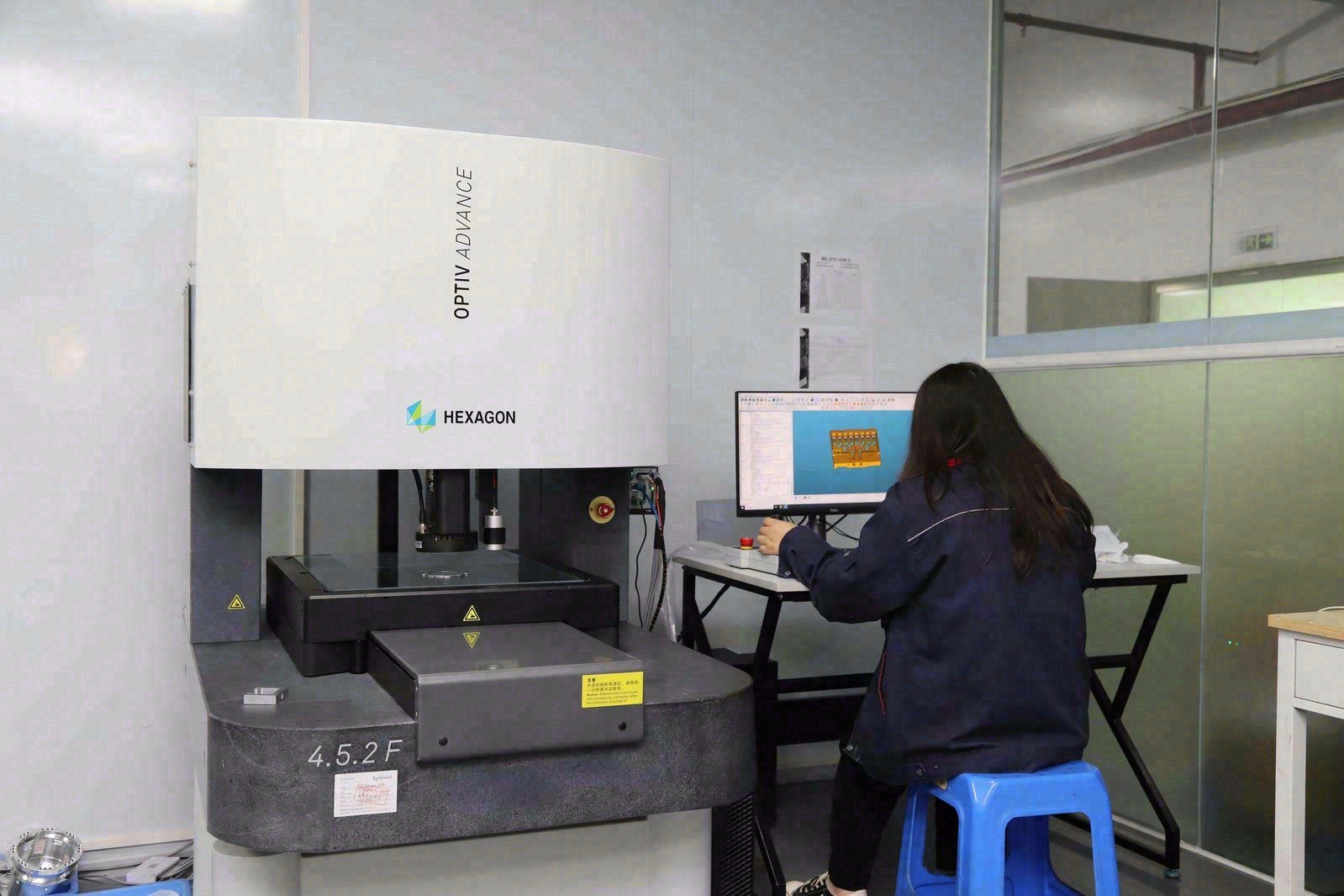
A medical device component carries obligations that a commercial part does not. The material must be provable to a lot and a certificate, the surface must meet a finish the application can tolerate, and the traceability must survive from raw material to finished part so that a complaint or a recall can be traced to its root. When you source medical CNC machined parts, you are not buying machining capability alone - you are buying evidence, and the evidence has to be audit-ready.
Plan around two artifacts and the rest falls into place. First, the material contract: an exact grade and condition, or a named medical polymer, backed by a certificate the supplier actually verifies against the delivered lot. Second, the first-article gate: a complete inspection package against the released drawing revision, reviewed before the production quantity is cut. Get those right and the tolerance, certification, and traceability questions become manageable details.
1. What changes when a machined part is headed into medical use?
The machining is often the same as a commercial job - the part is cut, measured, and finished on the same floor with the process bands behind the machining services. What changes is the obligation around it. Every material claim must be verifiable, critical dimensions must carry inspection evidence, process changes must be documented, and the records must survive reconstruction after the part is in service, possibly years later.
That changes supplier selection. A shop that machines well but treats records casually is a risk on a medical order, because the failure is discovered later, at the audit or the complaint, when the record cannot be produced. A shop that documents diligently but machines ordinary work fails the part instead. Both halves must be present, and a buyer should test them in that order - evidence first, then geometry.
The obligations also change the quote. A drawing with lot-level material requirements, defined inspection frequencies, and a first-article format is priced differently from the same geometry on a commercial print. A supplier that quotes the medical version without asking about the documentation format, the inspection frequency, or the review process is quoting a different job than the one you are buying.
2. Which medical alloys and polymers should the drawing name?
The medical material list is short and the conditions matter. In metals, 316L stainless is the workhorse for devices and instruments that meet body fluids or sterilization, chosen for its corrosion resistance and clean machined surface. Ti-6Al-4V ELI appears where implants and load-bearing instruments need strength, biocompatibility, and light weight. 17-4PH serves surgical tools and reusable instruments that need hardness and edge retention after aging. And for non-metal components, PEEK, POM, and medical-grade nylon appear where electrical insulation, radiolucency, or weight beat metal.
Each entry changes the process in a specific way. 316L is gummy to machine and needs sharp tools and controlled feeds to avoid work-hardening. Titanium is slow and expensive to cut, with heat management dictating tool life. 17-4PH is machined in the soft condition and aged afterward, which adds a heat-treatment step between roughing and finishing. Polymers cut with entirely different tooling and feeds, and they demand care with heat and burr control. The drawing that names grade, condition, or polymer specification is the drawing that can be quoted.
Lot traceability starts at the material. A medical order should name the specification the certificate must cite, so the buyer receives material that matches the device file rather than a shop's convenient substitute. The material decision on a medical part cannot be corrected by inspection - no dimensional report tells you the alloy or polymer was right - so it belongs on the drawing, in writing, before cutting starts.
3. What tolerances and finishes do medical parts realistically need?
Medical tolerancing is selective, not aggressive. The functional features - mating tapers, threaded interfaces, sealing surfaces, and features that locate mating instrument halves - carry the tight callouts, verified against the drawing's datum reference frame. The non-functional geometry runs at general tolerance, because a precision band on a cosmetic surface adds inspection without adding function.
Where tight callouts sit, a precision supplier works to established bands: milling and turning at ±0.003 mm, grinding at ±0.002 mm, with capability targets such as Ppk ≥ 1.67 at the initial study on key characteristics and Cpk ≥ 1.33 on general characteristics. Capability is reported per characteristic: every report names the feature, its tolerance band, the sample size, the sigma method, and the study window under the quality system. The realistic discussion is geometry- and material-dependent. A controlled bore in 316L is everyday work; a thin-walled titanium tube with tight concentricity is a first-article project. Implantable or instrument-critical features may require 100 percent inspection on the characteristic rather than sampling, which is a documentation decision as much as a measurement one.
Surface finish carries a functional meaning in medical work. A rough surface on an implant-adjacent part can harbor bioburden; a rough surface on a sliding instrument interface affects feel and wear. The drawing should name the finish and where it matters - the wetted surface, the mating surface, the cosmetic surface - because the finish spec and the material together decide whether electropolishing, passivation, or a machined finish closes the requirement.
4. What material documentation should a medical order carry?
The baseline record is the material certificate: grade, heat or lot number, condition, and the mill's composition and mechanical values, tied to the specification the material was produced to. On a medical order it should arrive with the parts, and it should be legible enough to audit. A certificate with an unreadable lot number or a grade that does not match the order is a stop-work finding, not a document.
For metals, the control behind the certificate is verification of the delivered lot - a composition check against the certificate so the heat stated is the heat machined. For polymers, the equivalent is the lot certificate and the processing records that tie the stock to its lot. Ask how incoming material is verified and what happens when a check fails, because no downstream inspection can catch the wrong alloy or the wrong polymer lot.
Set the documentation expectation in the order, not after it. Name the certificate requirement, the lot-traceability level, and the format in the RFQ, because segregated lots and lot-level records change how the shop plans the run and prices it. A supplier that knows the documentation is a deliverable will schedule and price for it; one that discovers it at shipping will improvise.
5. How do process validation and first-article work on a sourced part?
First-article inspection verifies every characteristic on the drawing against the approved configuration, in the customer's FAI format or an equivalent such as AS9102 where the program requires it. The machining supplier performs it on the first article and issues the package with the dimensional data behind each characteristic and the drawing revision used. That package is the evidence that the tolerance callouts were met, not just claimed.
The control is in the review, and the review should happen before production, not after. The device maker or an independent reviewer checks the datum scheme, the sampling, the measurement method, and the numbers against the drawing. If the FAI is produced after the full run is machined, it is no longer a first-article gate - it is a retrospective report, and it removes the safety the gate exists to provide.
Process validation on the machining side is about repeatability for the features that matter. Ask what the shop monitors on a repeat order - which characteristics are tracked on SPC charts, how the process is re-verified after a setup change, and what triggers a new first article. A supplier that treats the first article as a one-time event and the repeat orders as uncontrolled is a supplier whose second batch can drift without anyone noticing.
6. Which certifications matter, and where does ISO 13485 sit?
For a build-to-print machining supplier, the certifications with real content are ISO 9001:2015 and IATF 16949:2016 (product design excluded) for the quality system and ISO 14001:2015 for environmental management. Each proves a documented system under external surveillance, each should be current, and each should carry a scope that covers machining. Verification is one registrar lookup away, which is why certificates are the cheapest supplier filter in the process.
ISO 13485 is the medical-device quality standard, and its position in your supply chain decides how much it matters to the machining supplier. In most structures the device manufacturer holds ISO 13485 and manages its suppliers under a quality agreement and control plan, so a build-to-print machining shop with ISO 9001 and IATF 16949 (product design excluded) can carry the machining while the medical-system obligation sits with the regulated entity. If the contract independently requires ISO 13485 at the machining site, only a current certificate satisfies it.
Ask the question at quoting, in writing. Which certification structure applies to this part, and what scope does the machining supplier's certificate carry? A certificate number on a website is a decoration until it is checked against the registrar; a verified certificate with the right scope is a fact you can build a device file on.
7. What should the documentation package contain at delivery?
The physical parts and the paperwork should agree on arrival. The minimum package is the dimensional report on the critical characteristics, the material certificate, and a statement of conformity to the drawing revision. On a governed program, expect the first-article package, SPC charts on the monitored characteristics, and any non-conformance disposition records. If any of those are missing, the shipment is incomplete regardless of how the parts measure.
Reconcile the documents before you pay. The material certificate should name the heat or lot recorded on the traveler; the dimensional report should cite the same drawing revision as the FAI; the SPC charts should reference the same characteristics as the critical callouts. Disconnects between documents are the early symptom of a control breakdown, and they are cheaper to catch at receipt than at the next audit or the next complaint.
File the evidence by part identity, not by purchase order. Months later, when a question or a complaint arrives about a specific lot, the package should surface with the part, not with an invoice number. That filing discipline is the difference between traceability that exists on paper and traceability that works when it is tested - and in medical work, it is tested.
8. How do you qualify the supplier and place the first medical order safely?
Run the first order as a qualification, not as procurement. Choose a part that is representative of the harder work to come - real critical features, a demanding material, a genuine documentation requirement - and make the full package part of the deliverable. The purpose is to observe how the supplier machines the drawing, documents the results, and handles the questions, because that behavior is what scales.
Stage the qualification deliberately. Review the FAI independently before any production release. Verify the certificates against their registrars rather than accepting the logos. Confirm the incoming material verification exists and ask what it catches. If the order size justifies it, conduct a factory audit in person or by live video - the material store, the inspection bench, and the calibration records tell you more than any sales deck.
Then scale on evidence, not on optimism. A supplier that clears the qualification gate has demonstrated the controls your device file needs; a supplier that clears it only on price has not, and the difference will surface later as rework, expediting, or a finding in an audit. The first order is the cheapest place to learn what a supplier really is - and in medical sourcing, that lesson is worth more than any price difference.
Frequently Asked Questions
Can a general CNC turning and milling shop make medical device components?
Yes, for build-to-print components. The implantable and sterile-grade assemblies are usually managed higher up the chain by the device maker, while the machined metal and polymer parts come from precision suppliers under the device maker's quality agreement. A build-to-print shop certified to ISO 9001:2015 and IATF 16949:2016 (product design excluded) can serve that role with documented process control and full traceability.
Which materials are common on medical CNC machined parts?
The workhorses are 316L stainless for corrosion resistance, Ti-6Al-4V ELI for implants and load-bearing instruments, 17-4PH for strength in surgical tools, and polymers such as PEEK, POM, and medical-grade nylon for insulators and disposable components. Each grade must be named with its condition, because the condition sets the process route and the certificate.
What tolerances do medical machined parts typically need?
Functional mating features - threads, tapers, sealing surfaces - carry the tight callouts, and the rest runs at general tolerance. Precision milling and turning hold ±0.003 mm and grinding reaches ±0.002 mm, with capability targets such as Ppk ≥ 1.67 at the initial study on key characteristics and Cpk ≥ 1.33 on general characteristics. Capability is reported per characteristic: every report names the feature, its tolerance band, the sample size, the sigma method, and the study window. Implantable or instrument-critical features may demand 100 percent inspection rather than sampling.
What material documentation should a medical order carry?
A material certificate naming the grade, heat or lot, condition, and the mill's composition and mechanical values is the baseline, arriving with the parts or before them. The control behind the paper is verification of the delivered lot against the certificate - for metals, a composition check; for polymers, the lot certificate and processing records. Ask how incoming material is confirmed.
Who should produce the first-article inspection on a sourced medical part?
The machining supplier produces it against the approved drawing revision, typically in the customer's FAI format or AS9102 where the program requires it, with the measurement data behind every characteristic. The device maker or an independent reviewer approves it before the production release. That review gate is where sourcing risk is retired on the first order.
Which certifications matter on the machining side of a medical part?
For a build-to-print machining supplier, ISO 9001:2015, IATF 16949:2016 (product design excluded), and ISO 14001:2015 are the meaningful ones, current and covering machining in scope. ISO 13485 is the medical-device quality standard and usually sits with the device manufacturer or the regulated chain above the machining supplier. If your contract requires ISO 13485 at the machining site, only a current certificate satisfies it.
What should the delivery package contain for a medical machined part?
The dimensional report on the critical characteristics, the material certificate, and a statement of conformity to the drawing revision are the minimum. A governed program adds the first-article package, SPC charts on monitored characteristics, and any non-conformance disposition. The documents should reconcile with each other and with the drawing revision, because gaps are where risk hides.
How do you qualify a supplier for the first medical order?
Qualify before you scale. Send a representative drawing with real critical features and demand the full documentation package. Review the first article independently, verify the certificates against their registrars, and confirm the material verification practice with the supplier. If the program justifies it, audit the factory in person or by live video before the production release.
Qualifying a machining supplier for medical work?
Send the drawing and your documentation requirements to [email protected] and ask for the material, inspection, and first-article plan alongside the quote.